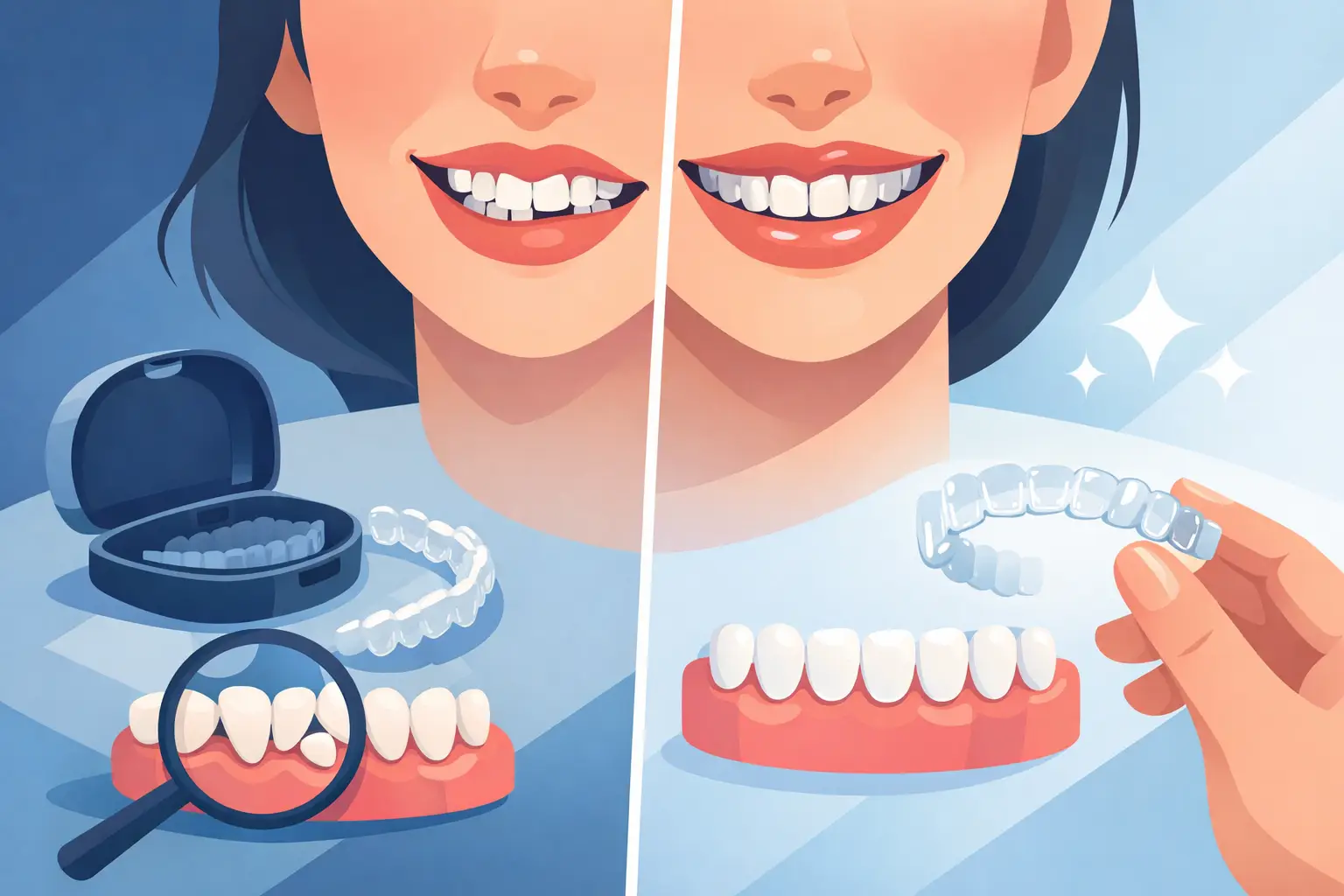
Some Invisalign before and after photos look dramatic, but the real story is usually more practical than flashy. Patients often notice small changes first – a front tooth that no longer overlaps, a gap that starts to close, or a bite that feels more even when chewing. Those steady improvements matter because Invisalign is not just about appearance. It can also support comfort, cleaning, and long-term oral health.
If you are thinking about clear aligners, it helps to know what actually changes, how long results take, and what can affect the final outcome. For many adults and teens, the biggest benefit is that treatment fits more easily into daily life than they expected.
What Invisalign before and after can really show
The best Invisalign before and after results are not only about straighter front teeth. They can also show better alignment across the full smile, reduced crowding, improved spacing, and a bite that comes together more properly. When teeth are better positioned, brushing and flossing may become easier, and some patients find they are less likely to trap food between crowded areas.
That said, not every case produces the same type of transformation. A patient with mild crowding may see a subtle but meaningful improvement. Someone with more significant spacing or bite issues may experience broader changes over time. The goal is not to chase a perfect social media result. It is to create a healthier, more balanced smile that works well and looks natural.
Common changes patients notice first
In the early stages, the first visible movement often happens in the most crowded or uneven areas. Front teeth may begin to line up, or a gap may look smaller after a series of aligners. These early shifts can be encouraging, but treatment usually continues beyond the first visible changes because the back teeth and bite also need attention.
Many patients also notice changes that are not easy to photograph. Their teeth may feel less crowded when flossing. Their bite may feel more stable. In some cases, they stop favoring one side when chewing. These improvements can be just as valuable as what shows in a mirror.
Appearance changes
Cosmetically, Invisalign can improve crowded teeth, mild to moderate gaps, and certain types of rotation. It can also help create a more even smile line. Because the trays are clear and removable, many patients feel more comfortable going through treatment at work, school, or social events.
Functional changes
A good before and after outcome may also include better bite contact, less pressure on certain teeth, and easier oral hygiene. For some patients, correcting alignment can reduce the wear that happens when teeth meet unevenly. Whether those changes are minor or more significant depends on the starting condition.
How long does Invisalign take to show results?
This depends on the case, but many patients begin to notice visible changes within a few months. Full treatment often takes longer. Mild cases may be completed sooner, while more involved alignment or bite correction can take well over a year.
The key factor is consistency. Invisalign works best when aligners are worn as directed, usually around 20 to 22 hours a day. If trays are left out too often, teeth may not track as planned, and progress can slow down. This is one of the biggest differences between the expected before and after result and the actual one.
Treatment timelines can also be affected by refinements. After the initial series of trays, some patients need additional aligners to fine-tune the result. That is normal and often part of getting a more precise outcome.
Why some Invisalign before and after results look better than others
Not every patient starts from the same place. The complexity of the case matters, but so do habits during treatment. If someone wears aligners faithfully, keeps appointments, and uses any recommended attachments or elastics, their results are generally more predictable.
Oral health matters too. Teeth and gums need to be healthy enough for orthodontic movement. If there is untreated gum disease, decay, or other issues, those usually need attention first. Moving teeth in an unhealthy mouth is not the right approach.
There is also a question of expectations. Invisalign is highly effective for many orthodontic concerns, but it is not the best answer for every case. Some severe bite problems or complex tooth movements may need another orthodontic option. A careful evaluation is what determines whether Invisalign is appropriate and what kind of before and after result is realistic.
What happens during treatment to create that before and after result?
Treatment starts with an exam and digital planning. This allows the dental team to assess alignment, spacing, crowding, and bite concerns, then map out how teeth should move over time. Patients can often see a projected treatment plan before starting, which helps make the process feel more concrete and less intimidating.
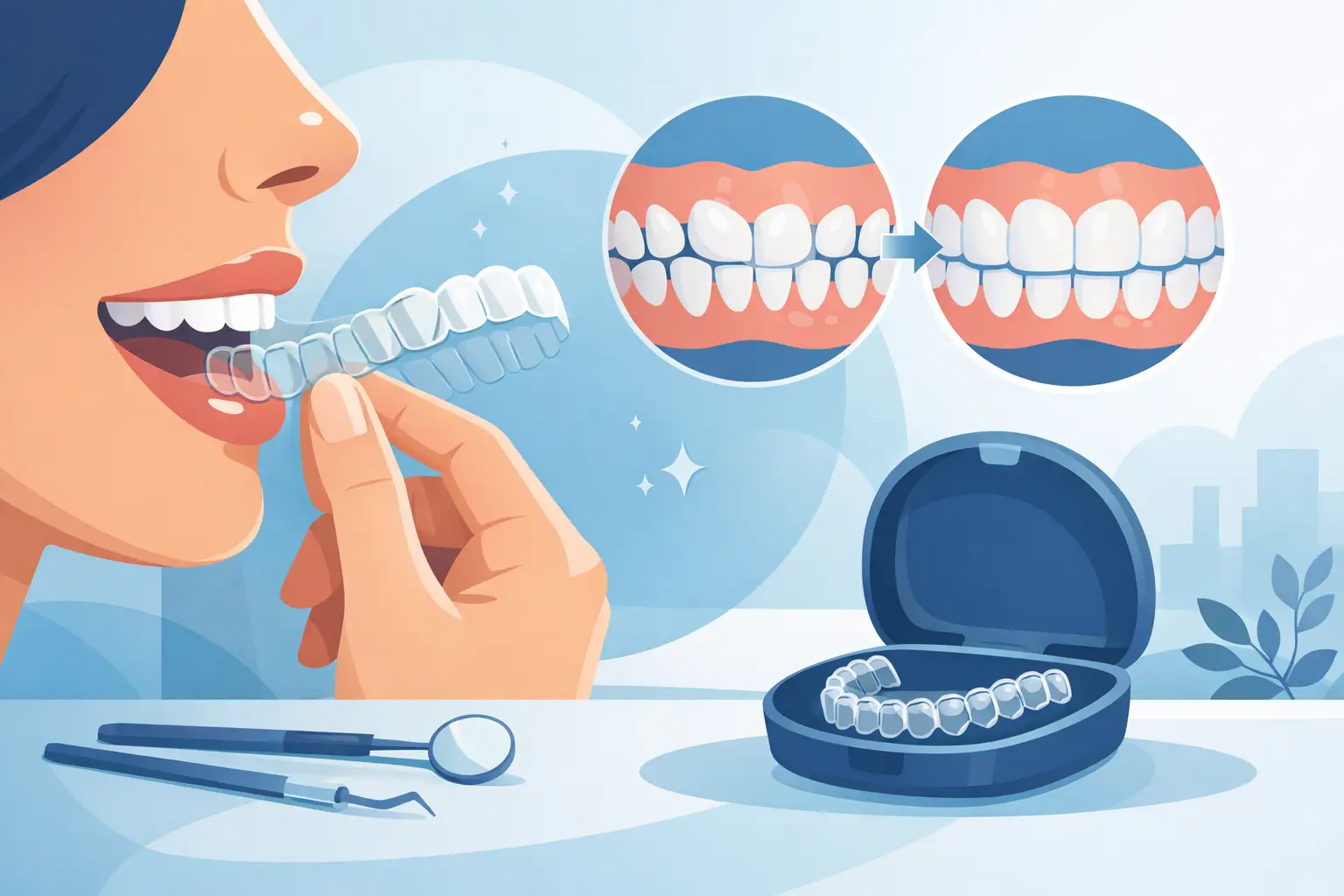
From there, a series of custom aligners is worn in sequence. Each set applies gentle pressure to guide specific tooth movement. Some patients also need small tooth-colored attachments bonded to certain teeth. These help the trays grip more effectively and make more precise movements possible.
As treatment continues, regular follow-up visits are used to monitor progress. If teeth are not moving as expected, adjustments may be needed. This supervision is important. Clear aligners are convenient, but they are still a clinical treatment, not a do-it-yourself cosmetic product.
What before and after photos do not show
Photos can be helpful, but they have limits. They usually show the final look of the teeth, not the discipline behind the result. They do not show how often the patient wore the aligners, whether refinements were needed, or how much bite correction happened in the back of the mouth.
They also do not show retention, which is what protects the result after active treatment ends. Without retainers, teeth can gradually shift back. A good Invisalign before and after outcome is not only about reaching the finish line. It is about maintaining the result afterward.
This is one reason patients should think beyond the photo. Ask what the treatment is meant to correct, how stable the result is likely to be, and what will be needed after treatment to keep the teeth in position.
Is Invisalign worth it for mild or moderate concerns?
For many patients, yes. If your main concern is a few crowded teeth, small gaps, or a smile that looks slightly uneven, Invisalign can be a practical option. The trays are discreet, removable for meals, and generally easier to fit into daily routines than many people expect.
Still, there are trade-offs. Because the aligners can be removed, success depends on patient cooperation. If you know you are likely to forget them or leave them out frequently, the outcome may fall short of the plan. Some patients also experience mild pressure when switching to a new set of trays, especially in the first few days.
Cost is another consideration, and it varies based on the complexity of treatment. Insurance coverage may help in some cases. For patients comparing options, the best approach is to look at overall value – not just the appearance of the final smile, but also comfort, convenience, oral health benefits, and how manageable the treatment feels.
When to talk to a dentist about Invisalign
If you are noticing crowding, spacing, or bite issues, a consultation can tell you more than online photos ever will. A proper exam can identify whether Invisalign is a good fit, how long treatment may take, and whether any dental work should be completed first.
This is especially important if you have fillings, crowns, gum concerns, or a history of dental anxiety. A supportive dental team can explain the steps clearly, answer questions about comfort and cost, and help you understand what kind of result is reasonable for your smile. At Clinique Dentaire Cartier, that conversation is meant to feel straightforward and reassuring, not pressured.
The most useful way to think about Invisalign before and after is simple: it is not about chasing a dramatic reveal. It is about steady, planned improvement that makes your smile healthier, easier to care for, and more comfortable to live with every day.
Nos dentistes peuvent évaluer votre situation. Appelez la clinique la plus proche ou demandez un rendez-vous en ligne.Our dentists can assess your situation. Call the nearest clinic or request an appointment online.