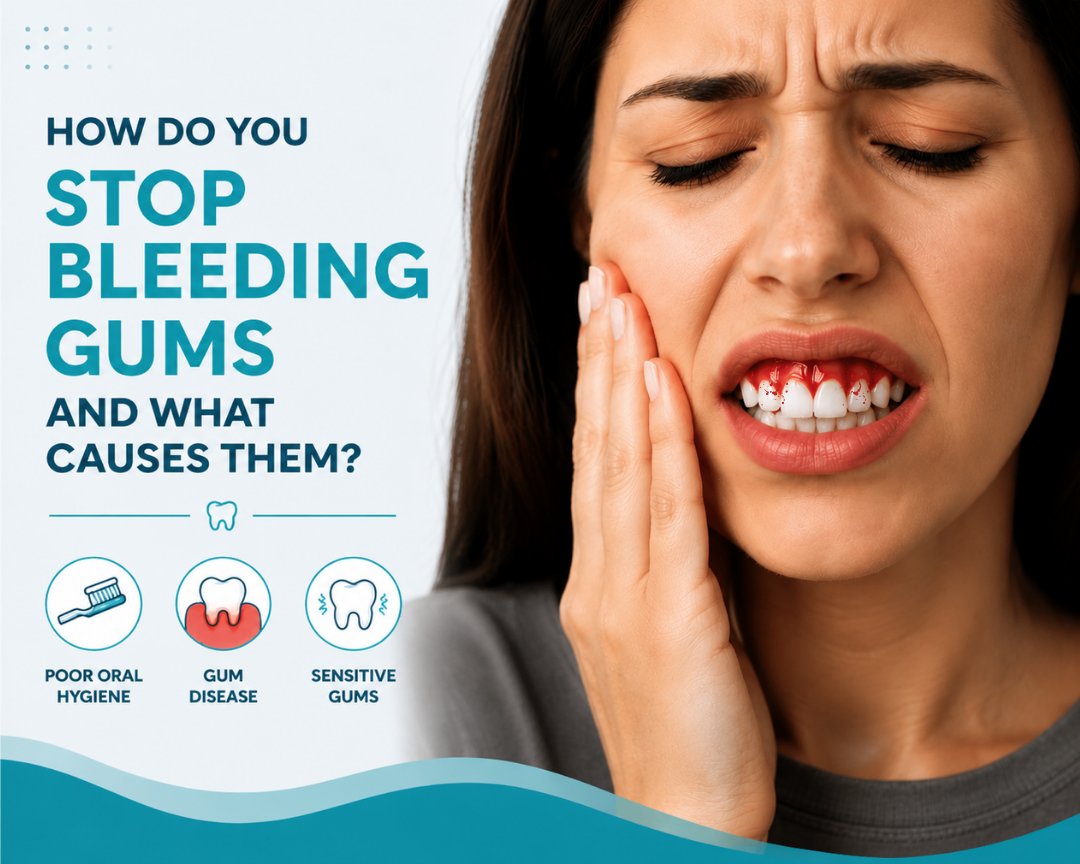
Bleeding gums are commonly caused by plaque buildup and gum inflammation. If your gums bleed when brushing or flossing, improving daily oral care and addressing the underlying cause can help stop the bleeding.
Many people search for how to stop bleeding gums when they notice these signs. Why your gums are bleeding can help you take the right next step and know when a dental examination is needed.
What Causes Bleeding Gums?
Plaque buildup is one of the most common causes of bleeding gums. When plaque remains along the gumline, it can irritate the gums and contribute to gingivitis. The gums may become red, swollen, tender, and more likely to bleed during brushing or flossing.
That irritation turns into gingivitis. Red gums. Tender gums. Gums that bleed when touched. The damage has not gone deep yet at this stage. Still reversible.
Brushing too hard causes it too, more often than people assume. More pressure does not mean cleaner teeth. It never has. Hard brushing scrapes the gum tissue instead of cleaning it, and the bleeding that follows is not inflammation. It is physical damage, plain and simple.
Other factors can also contribute to bleeding gums, including certain medications, pregnancy-related hormonal changes, and some vitamin deficiencies. If your gums are bleeding for no obvious reason or the bleeding keeps returning, a dental examination can help identify the cause.
Inflamed, Puffy and Reddened Gums
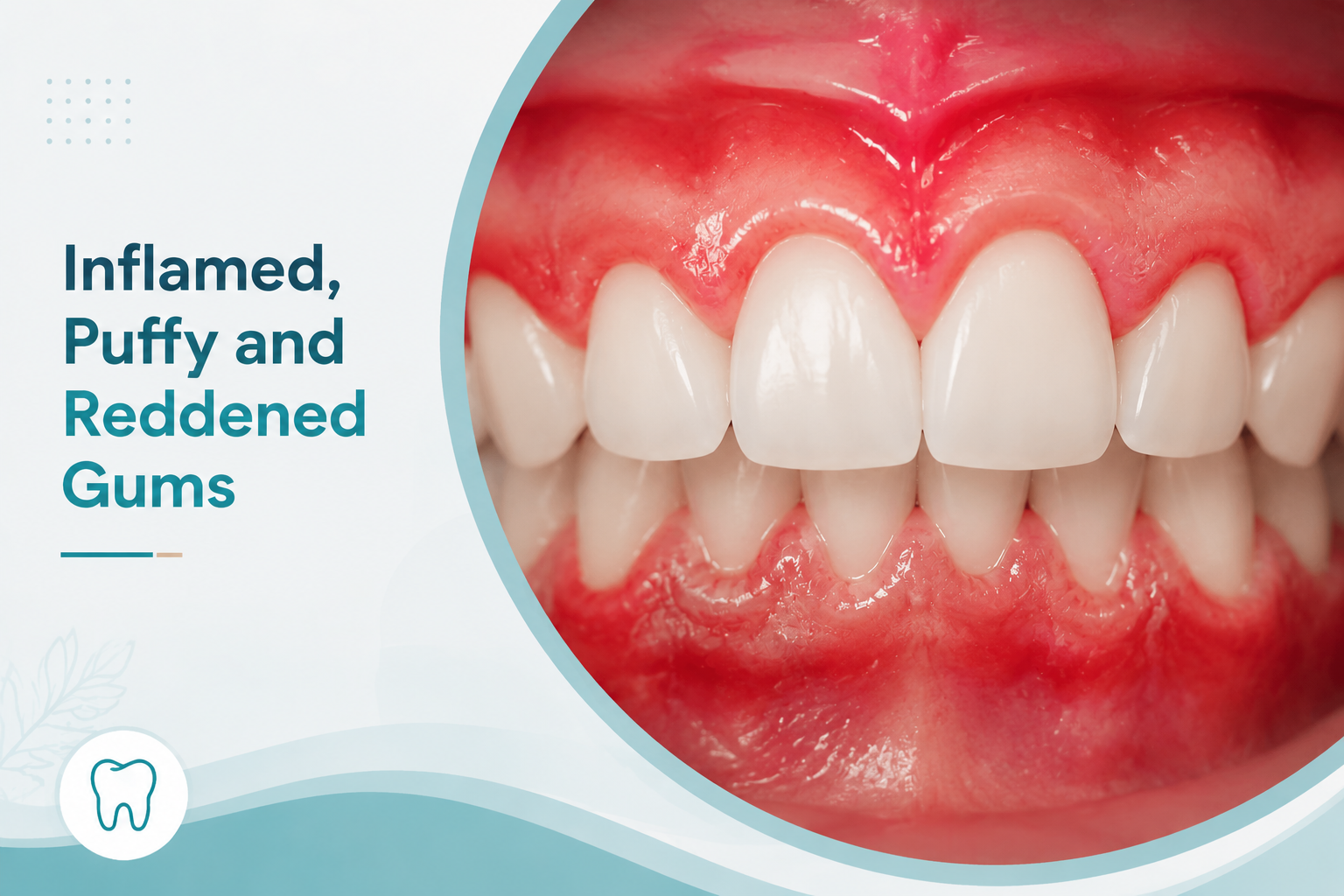
Healthy gum tissue is firm and pale pink. It sits tight against each tooth. No gaps. No swelling.
Something is wrong and that changes fast. Puffy gums swell outward. The colour shifts toward red or dark pink. The tissue feels tender when pressed or touched during brushing.
People ask why their gums are inflamed as though it is separate from why they are bleeding. It is not. Bacterial irritation at the gumline causes the swelling and the redness, and bleeding on gums follows from that same inflammation. Rarely one without the other.
| Symptom | What It Looks Like | Common Reason | Worth Checking |
| Bleeding gums | Blood when brushing or flossing | Plaque, gingivitis, brushing pressure | Yes, if it keeps happening |
| Puffy gums | Swollen, rounded tissue | Inflammation from plaque | Yes |
| Reddened gums | Deep red or purple colour | Active gum irritation | Yes |
| Inflamed gums | Tender, swollen, sensitive | Bacterial buildup | Professional cleaning often helps |
Gums Bleeding When Brushing and Flossing
Gums bleeding when brushing is where most people first notice a problem. The instinct is to back off, brush lighter around that spot, and avoid it. Wrong move.
Avoiding an area because it bleeds just lets plaque keep building there undisturbed. The irritation continues. The bleeding continues. Nothing gets better by skipping the spot that bleeds.
Flossing clears the spaces between teeth a toothbrush cannot reach. People who floss rarely tend to bleed when they start, simply because the tissue is not used to contact yet. Most of the time, it settles within a couple of weeks of flossing daily. Give it that long before assuming something is wrong.
Angle matters more than most people think. Bristles pointed slightly toward the gumline, not straight across the tooth. That is where plaque builds. That is where the irritation starts.
Bleeding Gums and Gum Disease
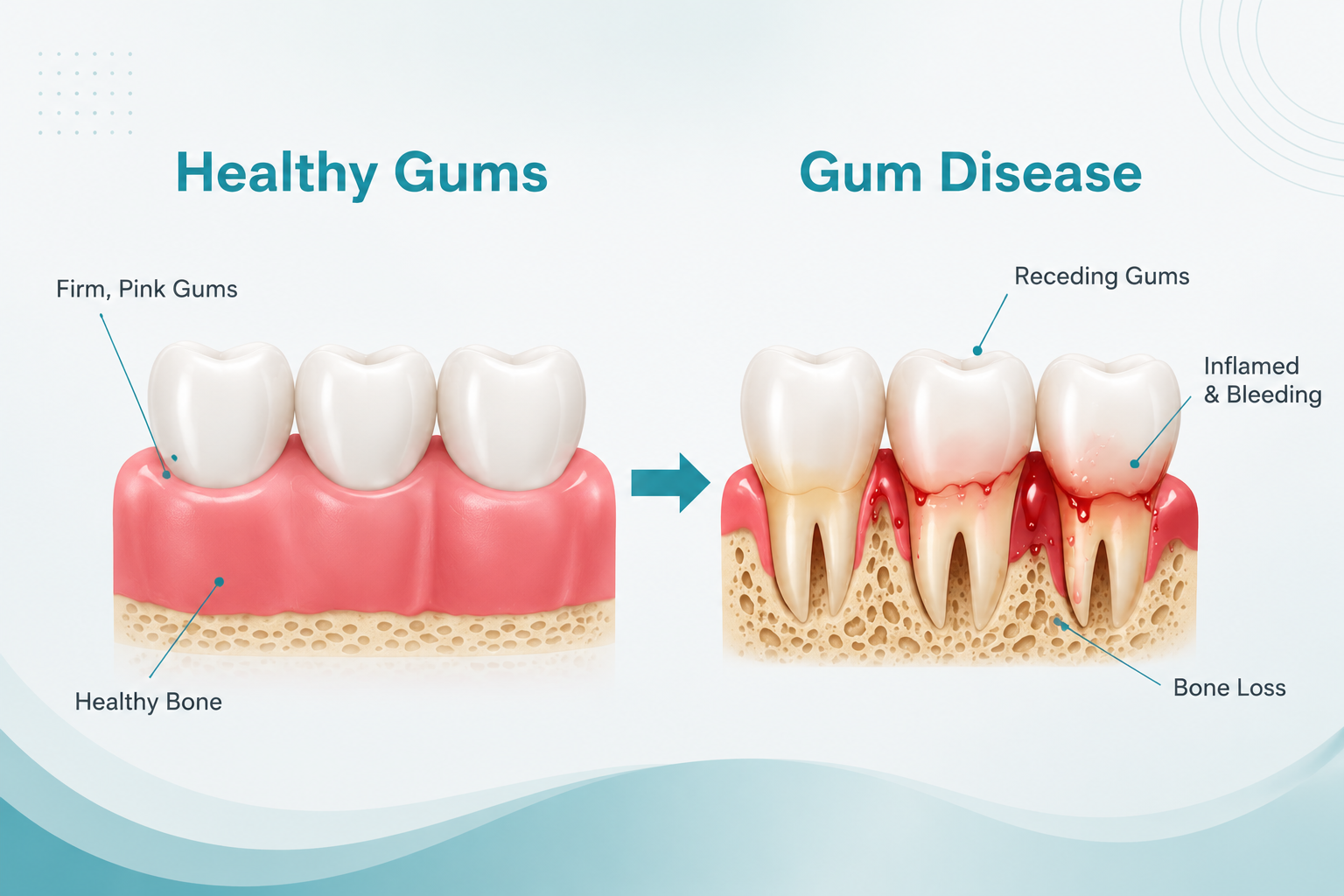
Bleeding gums can be an early sign of gum disease, especially gingivitis. Plaque buildup along the gumline can irritate the gums, causing redness, swelling, and bleeding. When identified early, gingivitis can often be reversed with proper oral hygiene and dental care.
If gum disease progresses to periodontitis, it can damage the tissues and bone that support the teeth. Persistent bleeding or other changes in the gums should be evaluated by a dental professional.
Plaque left long enough hardens into tartar. Tartar sits at and below the gumline where a toothbrush simply cannot remove it. That is what a professional cleaning is for. It clears what is driving the inflammation and gives the tissue an actual chance to recover.
If your gums continue to bleed despite consistent brushing and cleaning between your teeth, schedule a dental examination to determine the underlying cause.
How Do You Stop Bleeding Gums?
To help stop bleeding gums, focus on gentle daily cleaning and removing plaque around the teeth and gumline.
1. Brush twice a day: Use a soft-bristled toothbrush and gentle pressure. Avoid scrubbing the gums aggressively.
2. Clean between your teeth daily: Floss or use another dentist-recommended interdental cleaning method to remove plaque from areas a toothbrush cannot reach.
3. Do not stop cleaning areas that bleed: Avoiding the area can allow plaque to remain around the gumline and continue irritating the gums.
4. Get professional cleaning when needed: Hardened tartar cannot be removed with normal brushing and requires professional dental cleaning.
5. See a dentist if bleeding continues: Repeated or persistent bleeding should be evaluated to identify the underlying cause.
Bleeding that continues after a few weeks of genuinely better hygiene needs a dental visit. Not more brushing. A professional look.
How to Avoid Bleeding Gums
Good oral hygiene may help prevent bleeding gums. Brush gently twice a day, floss daily, and have routine dental cleanings. Have your gums checked by a dentist if they continue to bleed.
Why Are My Gums Bleeding?
Bleeding gums are commonly caused by plaque buildup and gum inflammation, but brushing too hard, hormonal changes, certain medications, and other factors can also contribute. If your gums keep bleeding even after improving your oral hygiene, a dental examination can help determine the cause.
Bleeding Gums and Gum Recession
Bleeding gums and gum recession can be related, especially when gum disease is involved. As gum disease progresses, the gums can pull away from the teeth, exposing more of the tooth and sometimes increasing sensitivity.
Receded gum tissue does not usually grow back on its own. In cases of significant gum recession, a gum graft may be considered to help cover exposed roots and protect the affected area.
Conclusion
Bleeding gums are often linked to plaque buildup and gum inflammation, but other factors can also contribute. Gentle brushing, daily cleaning between the teeth, and regular dental care can help support healthy gums. If bleeding continues despite consistent oral care, a dental examination can help identify the underlying cause.
We’re Here to Help With Your Gum Concerns
Our dental team is here to answer your questions and provide personalized care for your dental needs.
Book NowCall Now
FAQs
Why are my gums bleeding but not painful?
Bleeding without pain is often an early sign of gum inflammation. It can happen due to plaque buildup or gingivitis and should not be ignored if it continues.
What Deficiency Causes Bleeding Gums?
Vitamin C deficiency is the nutritional deficiency most clearly associated with bleeding gums. Severe vitamin C deficiency can cause scurvy, which may lead to swollen and bleeding gums. Vitamin K deficiency can also cause bleeding problems because it affects blood clotting.
Will gum bleeding go away on its own?
Mild bleeding from starting flossing may improve within one to two weeks. Ongoing bleeding usually needs better oral care or a dental checkup.
Why is only one gum bleeding?
Bleeding in one area may be caused by localized plaque, trapped food, or irritation around that tooth. A dental exam can identify the cause.
How long do bleeding gums take to heal?
With proper brushing and flossing, mild gum bleeding may improve within one to two weeks. Persistent bleeding should be evaluated by a dentist.
Nos dentistes peuvent évaluer votre situation. Appelez la clinique la plus proche ou demandez un rendez-vous en ligne.Our dentists can assess your situation. Call the nearest clinic or request an appointment online.